
KID’S CHOICE AWARDS HERO SPOT
3D ANIMATION, COMPOSITE
DURATION SOFTWARE
01:05 After Effects, Cinema 4D, D Dragon Frame, Nuke, Nuke Studio
Challenge students to bring all of their skills as motion designers together to complete a Motion Graphics Composite using real client footage provided by Nickelodeon.
Students will be provided with footage from Nickelodeon’s 2021 Kids’ Choice Awards Hero Spot: Blimp My Ride, and will be responsible for creating all graphics, 3D animations, and composites required to complete the assignment to "on-air" quality.
Project Brief
MY ROLE
In our team of 5, we all supervised different parts of the project. I was the Lead 3D Supervisor and an Assistant Compositor.
My responsibilities were as follows:
Validate that 3D camera tracks, scene scale, and animation hierarchies are technically sound.
Maintain a stable and predictable 3D-to-compositing handoff, including correct exports, naming conventions, and transforms.
Identify and resolve animation or pipeline issues before they impact compositing.
Oversee all modeling tasks within the project.
Ensure assets meet production standards for topology, scale, UV layout, and cleanliness.
Confirm models are optimized for animation, rendering, and downstream use.
Address asset-related issues that could negatively impact rigging, animation, or rendering.
I ended up using Procreate to paint on the textures. I then created bump maps for each one to ensure they weren’t flat and had a painted-on feel.
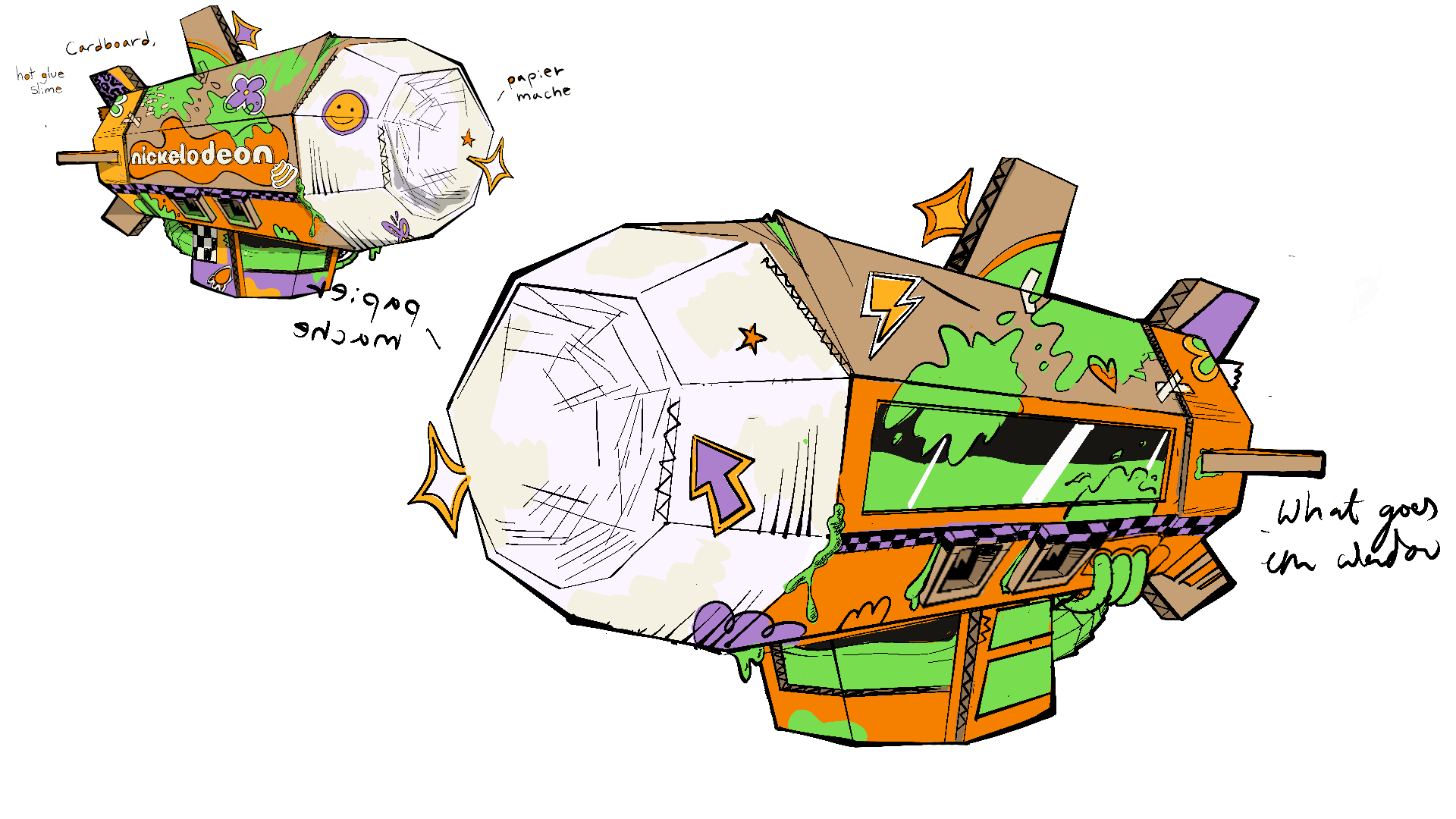
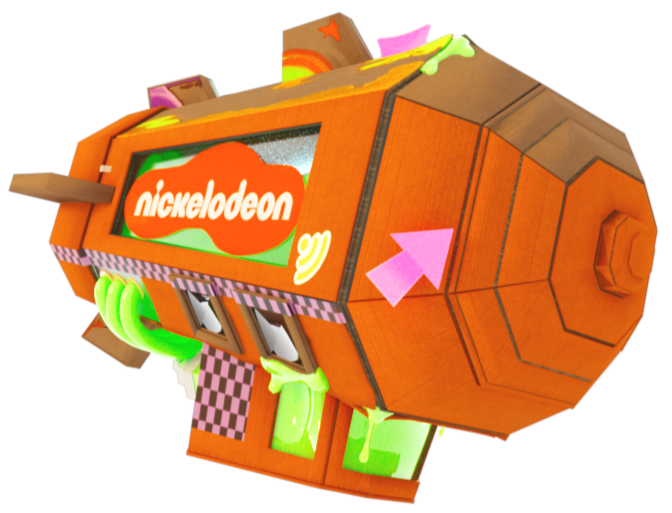
Speaking of the cardboard, we wanted the blimp to feel like something that you could put together with cardboard. We were inspired by things like Labo from Nintendo. It has to have a sense of feasibility, being able to make it.
I was given a shapes pass from my 3D Assistant, and from there, I focused a lot of my time on the modeling, sculpting, texturing, and detailing of the blimp.
In terms of the composite, I mostly helped out with the Camera tracking for the first shots.
That involved positioning it and making sure the Blimp didn’t slip, along with adding in the lighting and adapting the textures, to make sure that the blimp felt as realistic, but also visually pleasing as possible.
After the render was sent off to the compositing team, they would then help add in any other elements that were necessary to make it feel like it was in the space. I also helped with some small touches in some of the shots to add more realism.
THE BLIMP
As the 3D Supervisor, a majority of my time was spent working on the blimp. I started out working with one of the designers, we focused on figuring out the blimp’s visual identity, so that when I started modeling, I had a good reference.
One thing that we really wanted to focus on was the feeling that a child could have put this together. We wanted to give the feeling of when you see something a kid made, that’s not quite perfect, but just can’t help but give you the feeling of “aww”.
With that, we had a vision of the blimp being covered in stickers, paint, and hot “slime glue”. That meant that a LOT of UV textures were added to the blimp. I really wanted to make sure that the textures felt like added elements that have depth, instead of flat additions to the base texture.